Jack Crypto Casino UK: Coins, Deposits and Withdrawals
 Available in GB
Crypto is central to Jack’s payment model rather than a small extra feature. Current independent checks consistently identify major assets including Bitcoin, Ethereum, Tether, USD Coin, Solana, XRP, Litecoin, BNB, Dogecoin, Bitcoin Cash, TRON, DAI, Chainlink, Dash, Monero and Shiba Inu across the platform’s crypto payment offering. The exact cashier list is dynamic, so the account screen remains the final source for the asset and network available at the moment you transact.
For a UK reader, the important practical point is that Jack’s crypto layer affects both how money moves and how records should be kept. A deposit can involve a wallet address, a network choice and sometimes a third-party fiat-to-crypto route. Withdrawals are centred on crypto, so a player who enters with a familiar fiat method still needs a compatible wallet to receive funds. This guide explains the mechanics without promising fixed withdrawal speeds or limits.
There is also a tax distinction worth keeping clear. Ordinary gambling winnings and later transactions involving cryptoassets are not automatically the same tax event. HMRC says buying and selling cryptoassets is not treated as gambling, and disposing of cryptoassets can create Capital Gains Tax consequences depending on the facts. That means a casino win and what you later do with the crypto received should be considered separately.
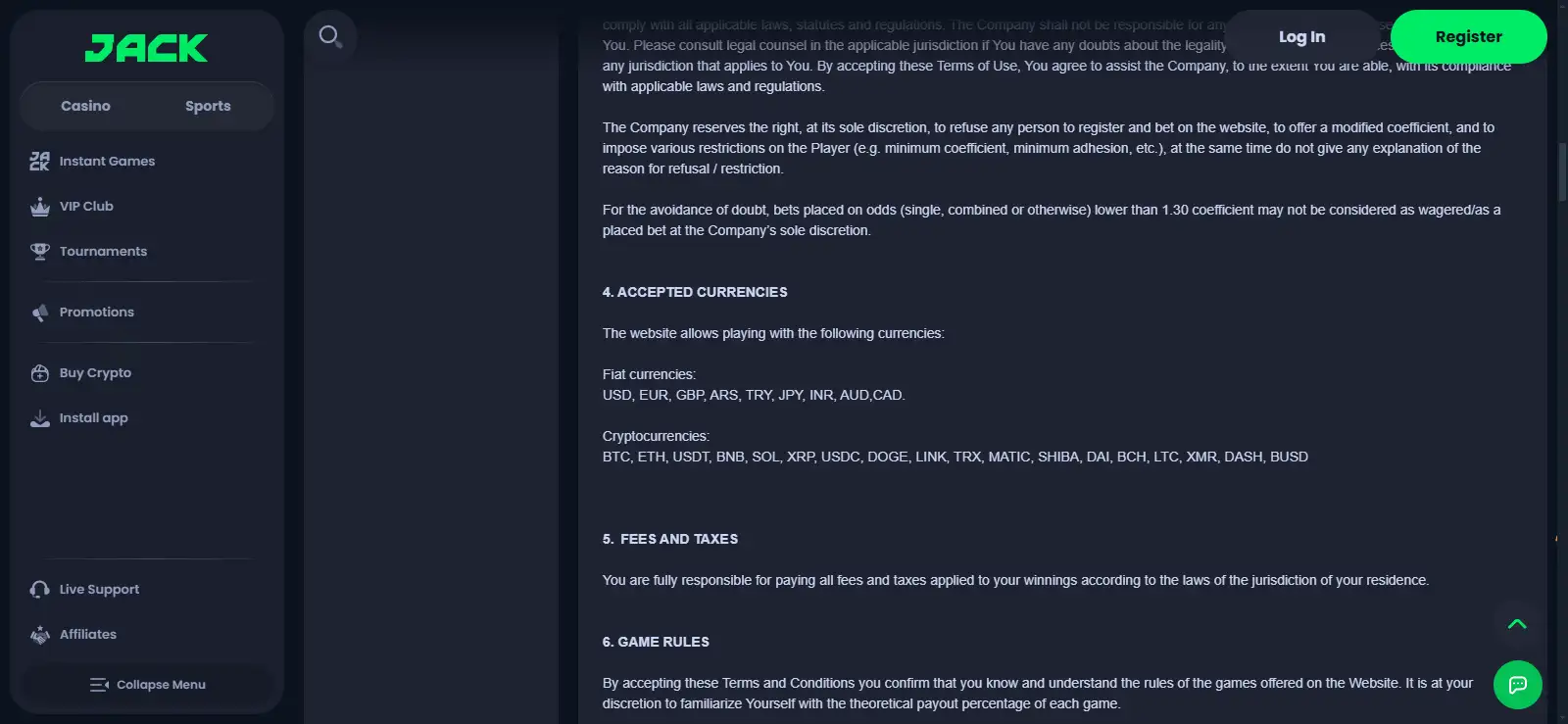
Table of Contents
- Why Jack is best understood as crypto-first
- Which cryptocurrencies are currently associated with Jack
- Network choice matters as much as the coin name
- Using GBP to buy crypto is a different flow from depositing crypto you already own
- Plan the withdrawal wallet before you make the deposit
- Volatility can change the GBP value after a casino balance becomes crypto
- UK tax: gambling winnings and cryptoasset disposals are separate questions
- A practical record-keeping routine for UK crypto users
- Common crypto mistakes are operational, not casino-specific
- When Jack’s crypto-first setup is useful – and when it adds friction
Why Jack is best understood as crypto-first
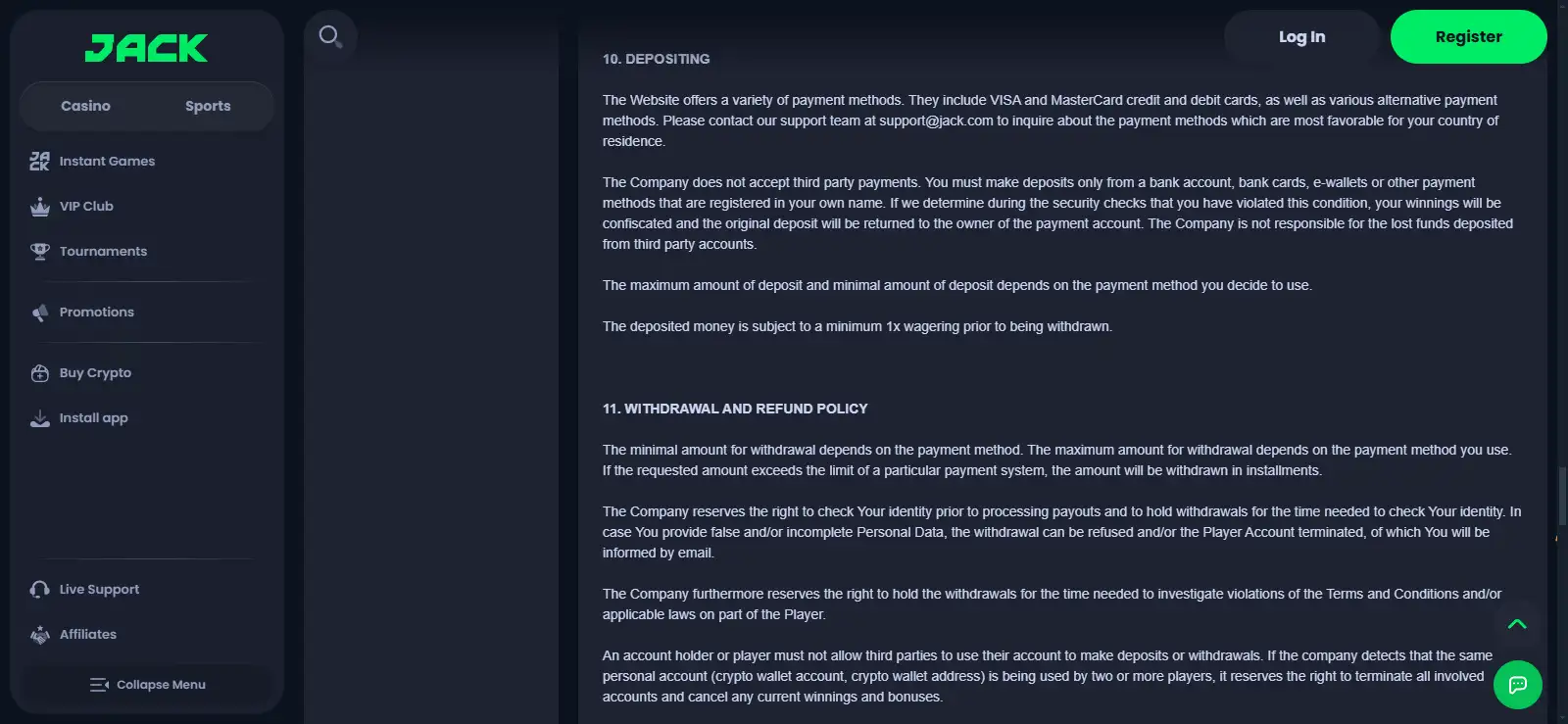
The wider Jack payment methods shows that the platform can expose cards, wallets, bank-style routes and crypto at the deposit stage. That broad entrance can make the cashier look like a conventional multi-method casino. The exit path is more important for planning, however: current independent reviews consistently describe withdrawals as cryptocurrency-based.
This makes crypto the structural centre of the payment model. If you already hold and control digital assets, that can be straightforward. If you normally use pounds, debit cards or an e-wallet, the experience can still begin in a familiar way but may end with a blockchain transaction. Treating those two stages as one workflow is more useful than judging the casino by the deposit screen alone.
That distinction also explains why a crypto page needs more than a list of coin logos. The key questions are whether you control the receiving address, whether the selected blockchain matches, how an asset’s value may move against GBP, and whether you can keep a clean transaction record. Those are practical issues even when the casino side of the transfer works as intended.
Which cryptocurrencies are currently associated with Jack
Across current 2026 sources, a stable core list appears repeatedly: BTC, ETH, USDT, USDC, SOL, XRP, LTC, BNB, DOGE, BCH, TRX, DAI, LINK, DASH, XMR and SHIB. Some older or less carefully maintained lists still use MATIC or include BUSD, while newer reviews use POL in place of MATIC and omit discontinued BUSD. That inconsistency is exactly why a copied static list should never override the live cashier.
The useful conclusion is not that every one of those assets and every possible network will always be enabled. It is that Jack supports a broad multi-asset crypto wallet environment, with major coins, stablecoins and several alternative networks represented. Before depositing, open the cashier and confirm the exact ticker, network and deposit instructions shown for your account.
If you are using a stablecoin, pay particular attention to the network label. USDT or USDC can exist on more than one blockchain, and the token name alone is not enough to identify the correct route. If the sending wallet and receiving address expect different networks, a transfer can fail or become difficult or impossible to recover.
Network choice matters as much as the coin name
A crypto deposit is not simply “send Bitcoin” or “send USDT”. The transaction has three parts that must agree: the asset, the blockchain network and the destination address. Some networks also require a memo, destination tag or other identifier. The cashier instructions should be read literally rather than inferred from a previous transfer.
Before pressing send, compare the network name in Jack with the network selected in your wallet or exchange. Then compare the beginning and end of the destination address after pasting it. For a first transfer on an unfamiliar route, a small test transaction can reduce the cost of a mistake, provided the amount still meets any minimum shown by the sending service or cashier.
QR codes reduce typing, but they do not remove the need to verify the network. Clipboard malware, address-book errors and selecting a similarly named chain are separate risks. The goal is to make the transaction boring: one asset, one clearly matched network, one verified address and a saved transaction identifier.
Using GBP to buy crypto is a different flow from depositing crypto you already own
Some current Jack payment coverage describes a fiat on-ramp that lets a user purchase cryptocurrency through a third-party provider using methods such as cards, bank transfer or mobile wallets. That is different from a direct crypto deposit from your own wallet. In an on-ramp flow, you are effectively making a purchase through another service before the crypto reaches the casino account.
That extra layer can introduce identity checks, conversion rates, provider terms and fees outside Jack itself. The amount charged in pounds may therefore not map one-for-one to the crypto amount credited after market movement or provider pricing. Read the final confirmation screen and identify which company is processing the purchase before approving it.
If you already own the desired crypto, a direct wallet transfer usually removes the fiat conversion step. If you do not own crypto, the on-ramp may be more convenient than opening a separate exchange account, but convenience should not be confused with simplicity. You still need to understand what asset you are receiving and how you will later withdraw it.
Plan the withdrawal wallet before you make the deposit
The most important decision can happen before the first deposit: where would you receive a withdrawal? Current evidence supports a crypto-centred cash-out model, so a UK player should have a receiving wallet or exchange account ready before funding the casino. Waiting until after a win creates unnecessary pressure at the point where accuracy matters most.
A receiving destination should support both the asset and the network Jack offers at withdrawal. An exchange deposit address can be convenient, but exchanges can change supported networks, pause deposits or require extra account checks. A self-custody wallet gives more control but also places responsibility for seed phrases and transaction accuracy on you.
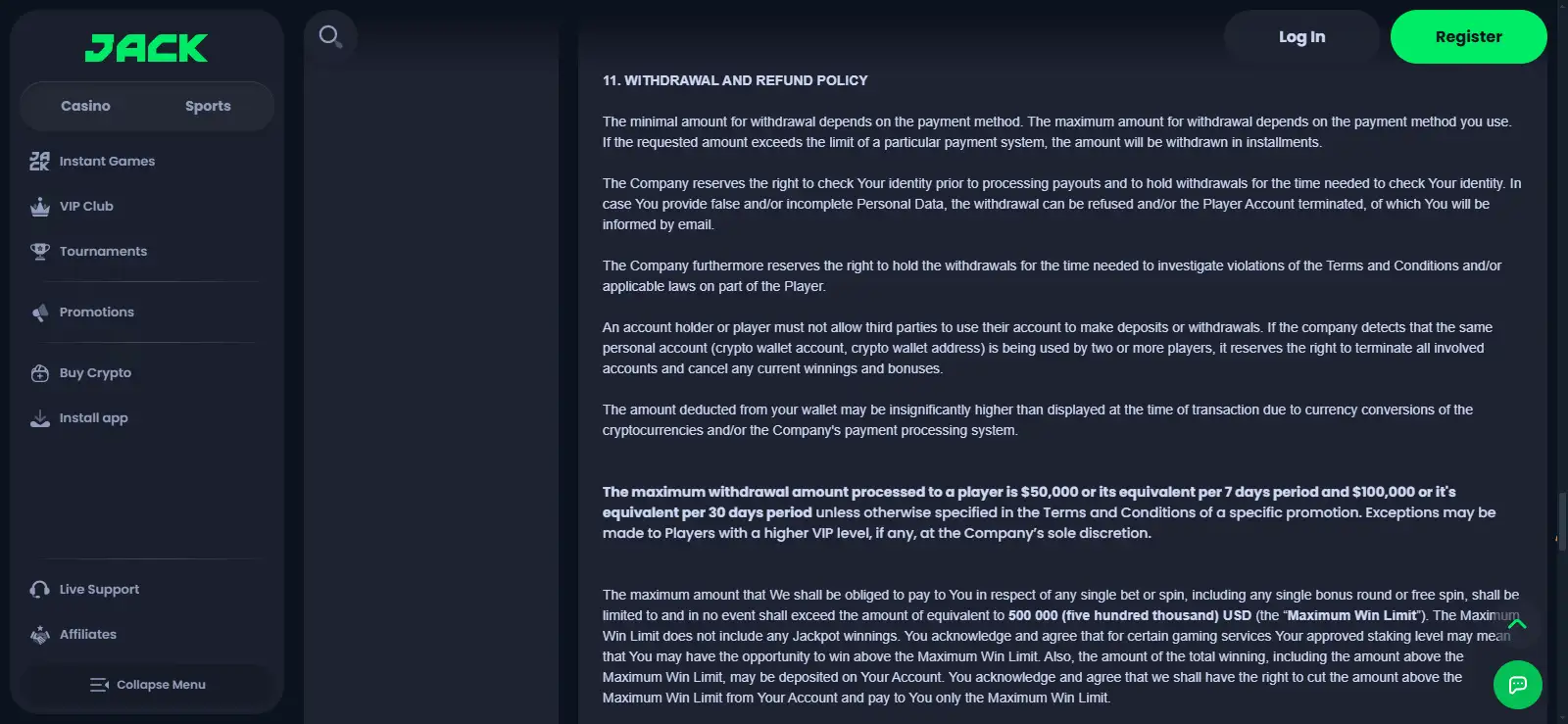
The detailed payout workflow is covered separately in the Jack withdrawals. This page deliberately does not publish fixed cash-out limits, fees or processing times because those are freshness-sensitive, high-risk details that should be read from current official account terms rather than copied from a review.
Volatility can change the GBP value after a casino balance becomes crypto
A gambling balance and a cryptoasset holding are economically different. If a withdrawal is received in BTC, ETH or another volatile asset, its sterling value can rise or fall after the transfer. A player who mentally records a win as a fixed GBP amount can therefore see a different real-world value by the time the asset is sold or exchanged.
Stablecoins can reduce some price volatility against their reference currency, but they introduce different risks, including issuer, platform and network considerations. They also do not eliminate GBP conversion effects if the stablecoin is denominated against the US dollar. For a UK user, it is useful to record the GBP value at relevant transaction times rather than relying only on the coin quantity.
This is not a prediction about crypto prices. It is a record-keeping point. When gambling and crypto are combined in one payment journey, separating the casino result from later market movement makes it much easier to understand what actually happened financially.
UK tax: gambling winnings and cryptoasset disposals are separate questions
HMRC’s published crypto guidance says it does not consider buying and selling cryptoassets to be the same as gambling. It also explains that individuals may have Capital Gains Tax consequences when they dispose of cryptoassets, including by selling them, exchanging one token for another, using them to pay for goods or services, or giving them away in circumstances that count as a disposal.
That matters for a crypto casino user because the origin of the asset and the later disposal of the asset are different events. A gambling win received as crypto does not mean every later increase in the crypto’s value inherits the treatment of the original gambling result. If you keep the asset and its value changes before you sell or swap it, the later crypto transaction has its own tax analysis.
HMRC’s current guidance can be checked directly in its Cryptoassets Manual on gambling and cryptoassets and its guidance on disposing of cryptoassets. Tax depends on individual facts, so these primary sources are more appropriate than treating a casino review as personal tax advice.
A practical record-keeping routine for UK crypto users
Good records make both support queries and later financial review easier. For each transfer, keep the date and time, asset, network, amount, transaction hash and the sending and receiving service. Where a GBP value is shown, save that too. If a third-party on-ramp is involved, retain its purchase receipt separately from the casino deposit record.
- Save the casino transaction confirmation or cashier history entry.
- Record the blockchain transaction hash when one is available.
- Note the exact asset and network, not just the coin brand.
- Keep the GBP value shown by the service at the relevant time.
- Retain any exchange or on-ramp statement used to buy or sell the asset.
- Do not store wallet seed phrases in the same notes or saved images.
This is useful even if no tax reporting is ultimately required. A clear trail helps distinguish a casino credit, an on-chain transfer, an exchange conversion and a later disposal, instead of collapsing them into one vague “crypto payment”.
Common crypto mistakes are operational, not casino-specific
The biggest avoidable failures are usually ordinary blockchain errors: choosing the wrong network, sending the wrong token, omitting a required memo, pasting an incorrect address or sending to a service that does not support the chosen chain. These risks exist regardless of whether the destination is Jack, an exchange or another wallet.
Security practice matters as well. Use two-factor authentication where available, do not approve wallet prompts you do not understand, and never share a seed phrase with casino support or anyone claiming they can reverse a transfer. A genuine support agent does not need your private recovery phrase to investigate a transaction hash.
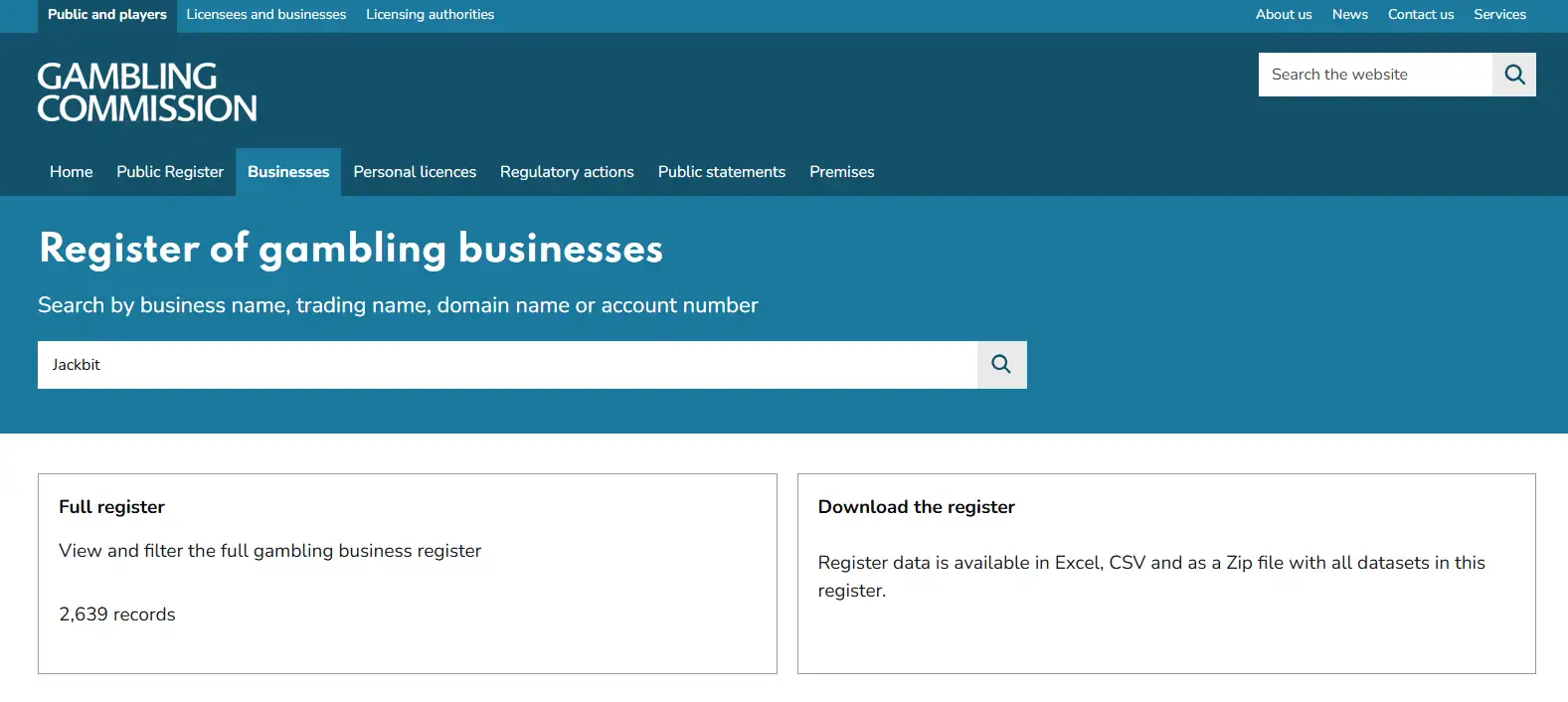
For the broader account-safety picture, including licensing and verification context, use the Jack safety and trust. Crypto convenience should be assessed alongside account controls and the regulatory position, not treated as proof of safety by itself.
When Jack’s crypto-first setup is useful – and when it adds friction
Jack’s payment model is most natural for a player who already understands wallets, controls a suitable receiving address and is comfortable checking networks before every transfer. In that case, the platform’s broad crypto support and crypto-centred withdrawals fit an existing routine instead of creating a new one.
It adds friction for someone who wants an entirely GBP-based journey. A familiar deposit method does not remove the need to understand the crypto exit path, and converting between pounds and digital assets can create extra records, provider steps and market exposure. The right question is therefore not simply whether Jack accepts crypto. It is whether crypto is already a payment method you are prepared to manage accurately.
Before using the cashier, confirm the current asset and network list in the live account, decide where a future withdrawal would go, and keep the gambling transaction separate in your records from any later crypto sale or exchange. For a broader comparison of funding routes, return to deposits and payments, or read the Jack Casino UK review for the wider platform assessment.
Created by the ”Jackbit Casino” editorial team.